Untracked Work Consumes Engineering Time
Interrupts, escalations, onboarding help, and ad hoc requests are handled anyway, yet they rarely appear in the team’s delivery picture. By the time the period closes, the capacity is already spent.
For In-House Product Teams
Every team can see its feature work. Tolmete reveals what surrounds it: the interruptions, escalations, rework, and onboarding that fill the gap between the plan and the result. It surfaces delivery risk early and keeps team health in view, all in one AI-powered platform.
The Problem
Status updates are often manual, optimistic, and late to reflect what is really happening. By the time capacity drift appears in a review, the team has usually already spent the time, missed the signal, or adjusted the plan too late. The signals were there all along, scattered across tickets, commits, and calendars. They were just never connected.
Tolmete reads those signals in real time and surfaces delivery risks, capacity drift, and team health concerns early enough for managers to act.
Interrupts, escalations, onboarding help, and ad hoc requests are handled anyway, yet they rarely appear in the team’s delivery picture. By the time the period closes, the capacity is already spent.
Because status updates lag behind reality, delivery risk appears only in a review or leadership update, by which point the remaining options are the expensive ones.
Without a clear record of where capacity went last period, teams continue to make planning decisions based on guesswork.
When effort spreads across features, bugs, tech debt, support, and escalations, explaining where engineering time went or defending it to stakeholders becomes difficult.
Position
Every commit, ticket, and logged hour says something about how the team is really spending its time. Tolmete connects those signals into one operating layer: capacity by initiative, delivery risk as it forms, team health while there is still time to act, and the stakeholder and engineering-investment picture leadership needs. It runs on the tools your team already uses and leaves them exactly where they are.
Commit metadata, tickets, reviews, calendar events, messages, time logs
Product, initiative, contributor, Activity Type, time, delivery context
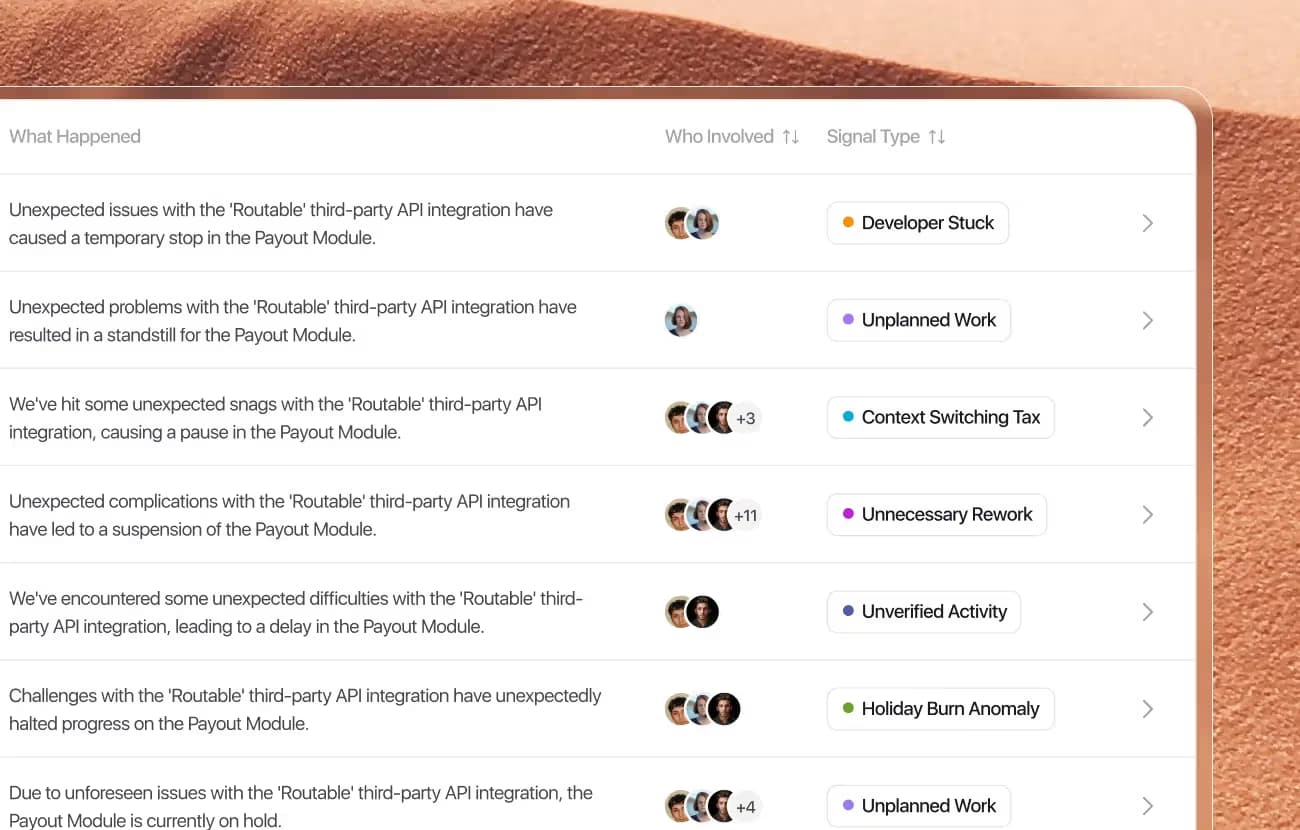
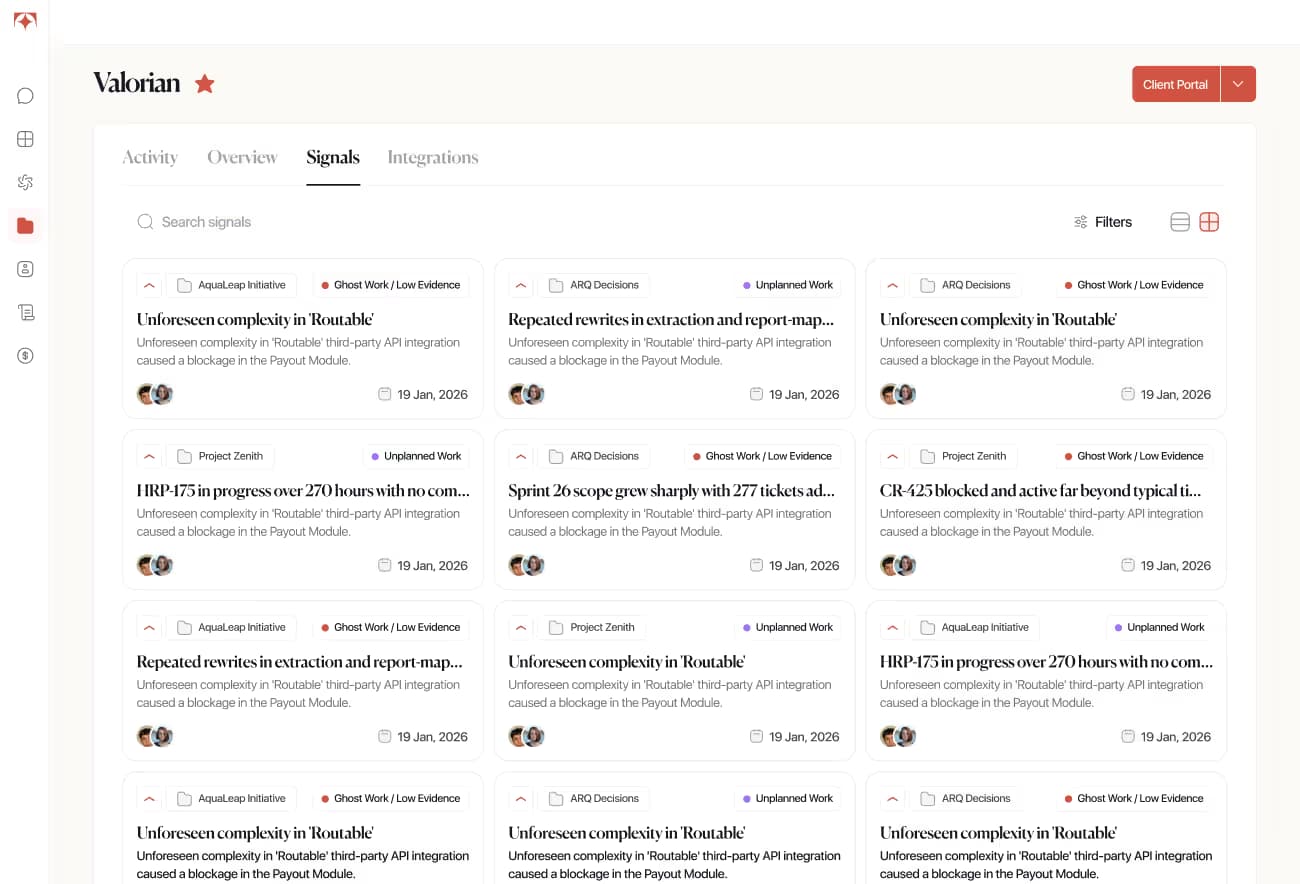
Unplanned or expanded work, stalled tasks, execution delays, repeated rework, stalled onboarding, delayed reporting, knowledge concentration risk, burnout risk, unverified work records
Risk summary with impact, supporting context, and recommended next step
Effort stays connected to products, initiatives, and Activity Types, so stakeholders see what happened and where attention is needed.
Core Value
Tolmete covers the four moments where margin is made or lost: capturing billable work, reading project health, acting on risk, and preparing client billing. Each one runs from the same connected delivery data.
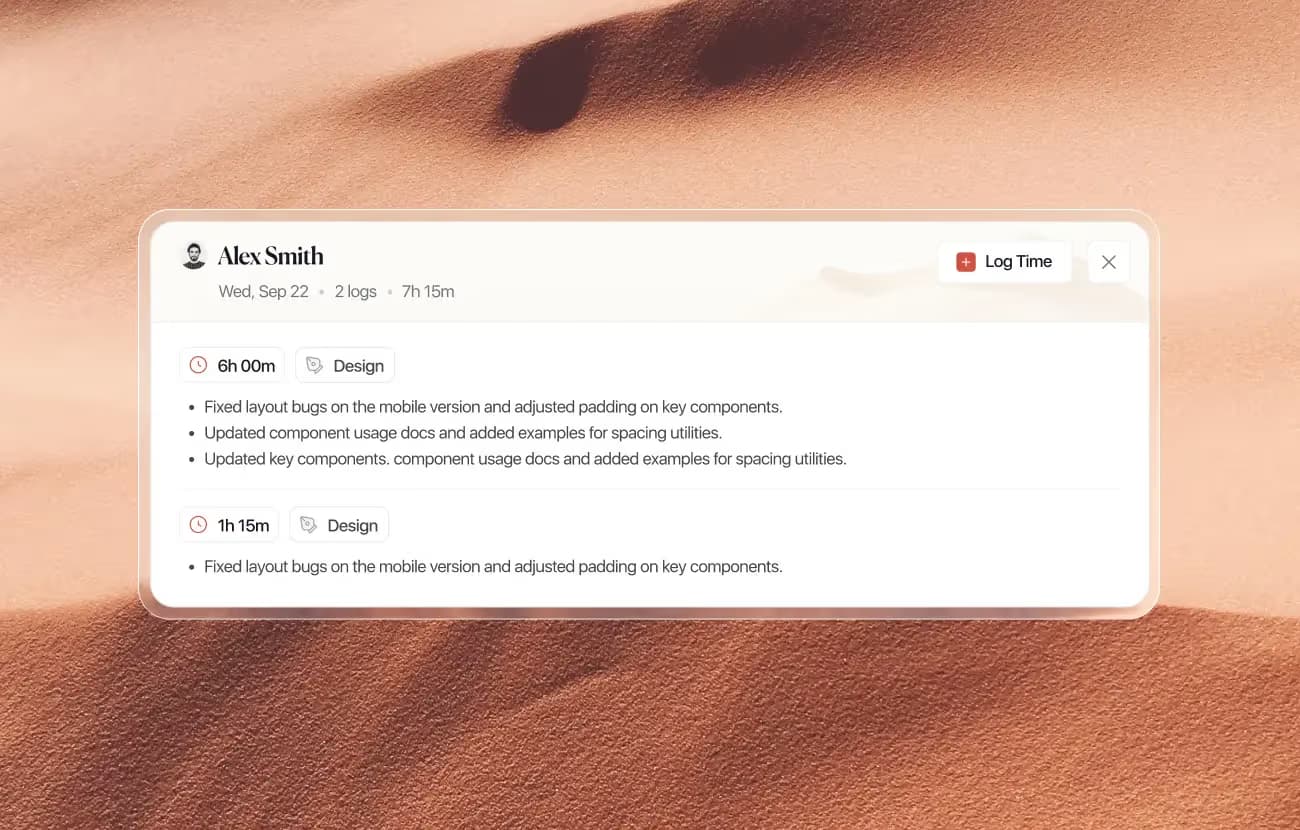
Engineers and designers describe their work in plain language, by chat or voice, and Tolmete prepares a structured time log draft. The contributor reviews and confirms it before saving.
The impact:
Cleaner records of where effort went, with less admin and fewer hours that never get attributed, across features, bugs, tech debt, support, and onboarding alike.
Tolmete shows managers how initiatives are progressing from actual work signals, not only manual status updates.
The impact:
Teams see where work is moving, where it is slowing down, and where effort may begin to pull away from current priorities.
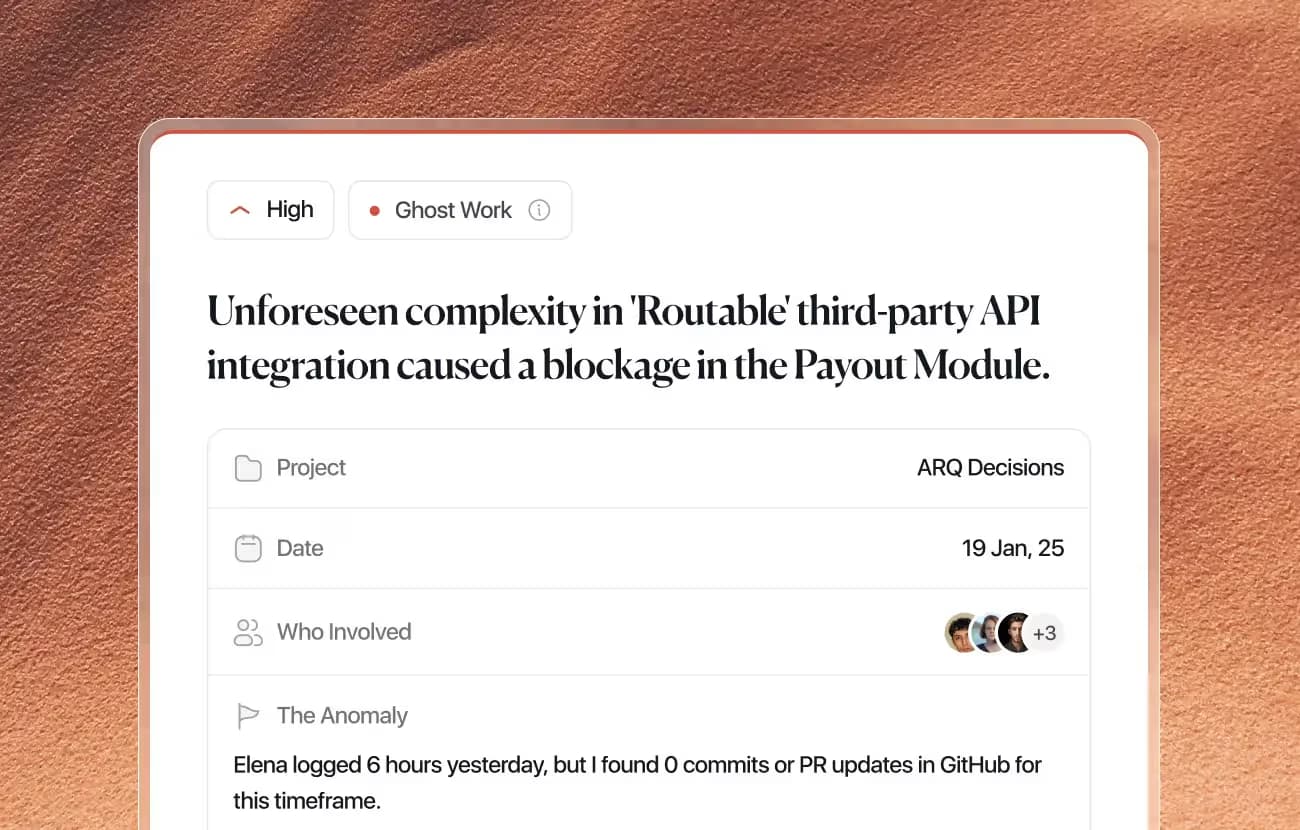
Tolmete surfaces patterns like unplanned work, stalled tasks, repeated rework, stalled onboarding, knowledge concentration, or burnout risk, each with context and a suggested mitigation plan: what needs attention, who should act, and how urgent it is.
The impact:
Teams respond while a risk is still manageable, with a reassignment or priority change instead of a quarter-end surprise.
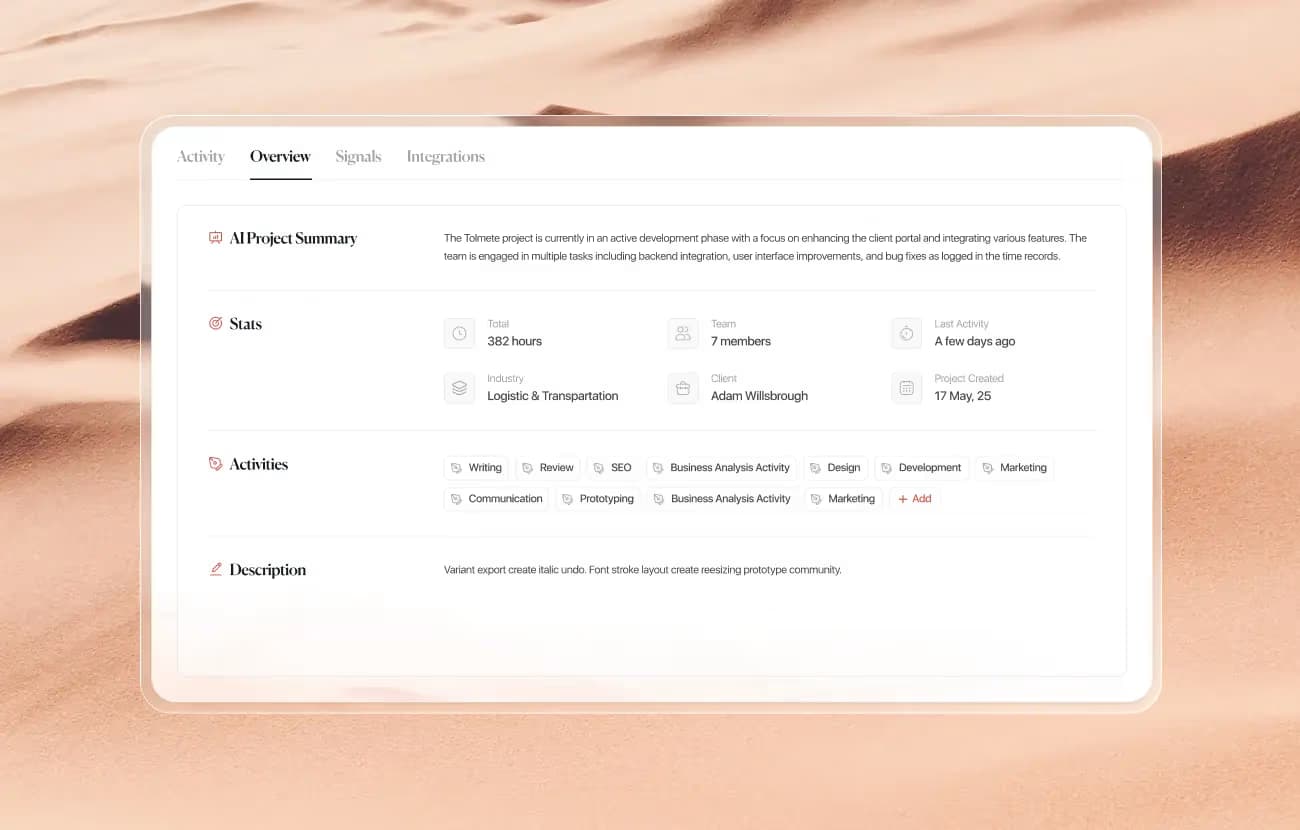
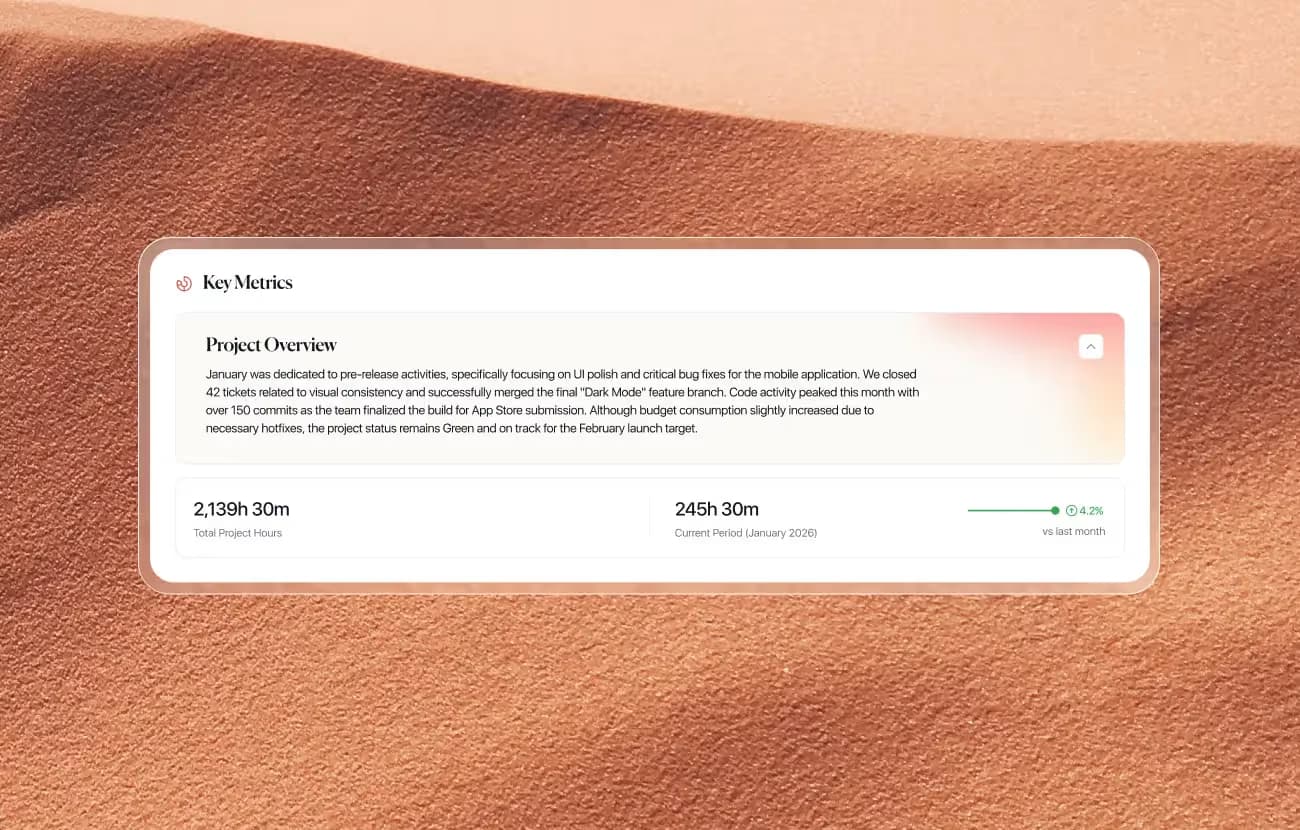
Tolmete links approved logs to real delivery activity and uses AI Project Summary to describe completed work in clear language, grouped by Activity Type, initiative, or team member.
The impact:
Quarterly reviews and “where-did-the-time-go” questions no longer require a PM to rebuild the story by hand. Leaders get an always-available view of teamwork.
When the period closes, Tolmete organizes effort by product, initiative, and Activity Type, keeping feature work, maintenance, support, onboarding, and tech debt clearly separated.
The impact:
Engineering investment becomes easier to explain. Leadership can see what capacity was supported, what it produced, and where effort went beyond planned work.
A quarter can drift one interrupt, escalation, or delayed decision at a time. Tolmete keeps delivery, team health, stakeholder reporting, and engineering investment connected across the whole cycle, so the work filling your team's days stays visible from the first time log to the quarterly review
Log Work
Detect Delivery Risk
Review Team Health
Share Progress with Stakeholders
Explain Engineering Investment
How It Works
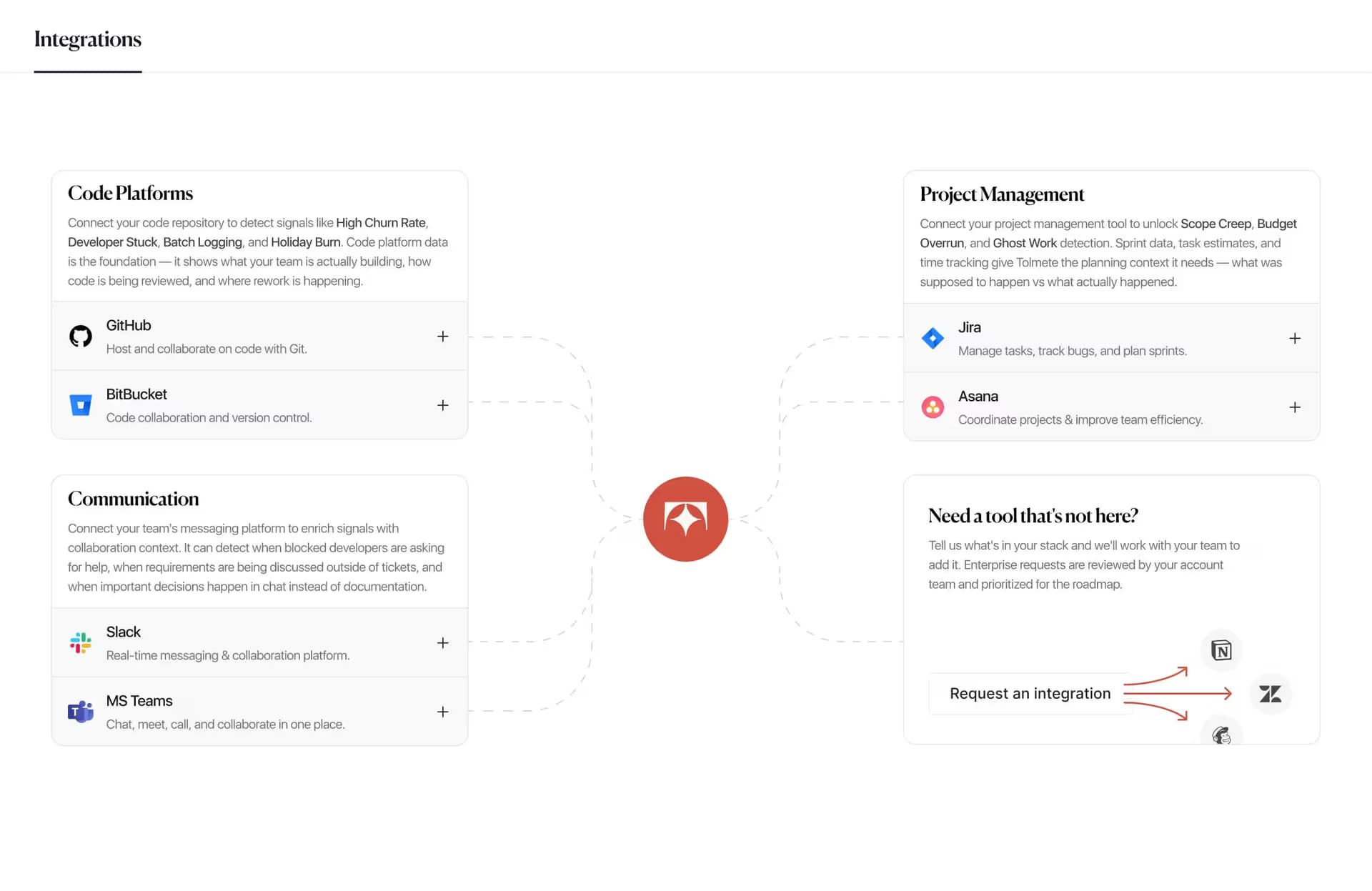
Tolmete works with the tools your team already uses, reading delivery activity and turning it into structured logs, early risk signals, and stakeholder-ready reporting.
01/05
Tolmete connects to the tools where product work already leaves signals: tickets, pull requests, messages, calendar events, and work logs. Teams can start with AI-assisted time logging and add deeper integrations as they need more delivery context.
Use Cases
The hardest moments for a product team are not the planned ones. They are the weekly review pieced together from scattered updates, the stakeholder question nobody can answer with evidence, the squad buried in interrupts before anyone notices. Tolmete gives product teams clarity at each of these moments.
Know which initiatives need attention before the next review.
Instead of: Asking each manager to summarize updates from tickets, pull requests, and inboxes by hand.
With Tolmete:
Delivery leaders see blockers, unplanned work, delays, repeated rework, and team health risks in one place.
Explain progress, risks, and where engineering time went, backed by evidence.
Instead of: Rebuilding the story from tickets, messages, work logs, and scattered updates before every leadership review.
With Tolmete:
Managers arrive with a clear summary: what was done, where time went, which risks need attention, and what comes next.
Notice when a team is heading toward overload before delivery suffers.
Instead of: Realizing that unplanned work has taken over a third of the team's capacity, only after the schedule has already slipped.
With Tolmete:
The pattern appears early, with team health signals attached, so a manager can rebalance the workload and adjust priorities in the same week.
Start planning with evidence instead of estimates.
Instead of: Making planning decisions without knowing where last period's capacity actually went.
With Tolmete:
Effort is already organized by product, initiative, period, and activity type, with delivery context behind every hour.
Unplanned interrupts, repeated rework, delayed reporting, stalled onboarding, and constant context-switching rarely appear as a single line item. Across a quarter, though, they add up to a steady drain on delivery momentum. Estimate how much of your most expensive resource goes to work that is hard to explain, report, or improve.
Calculate Your Billing Leakage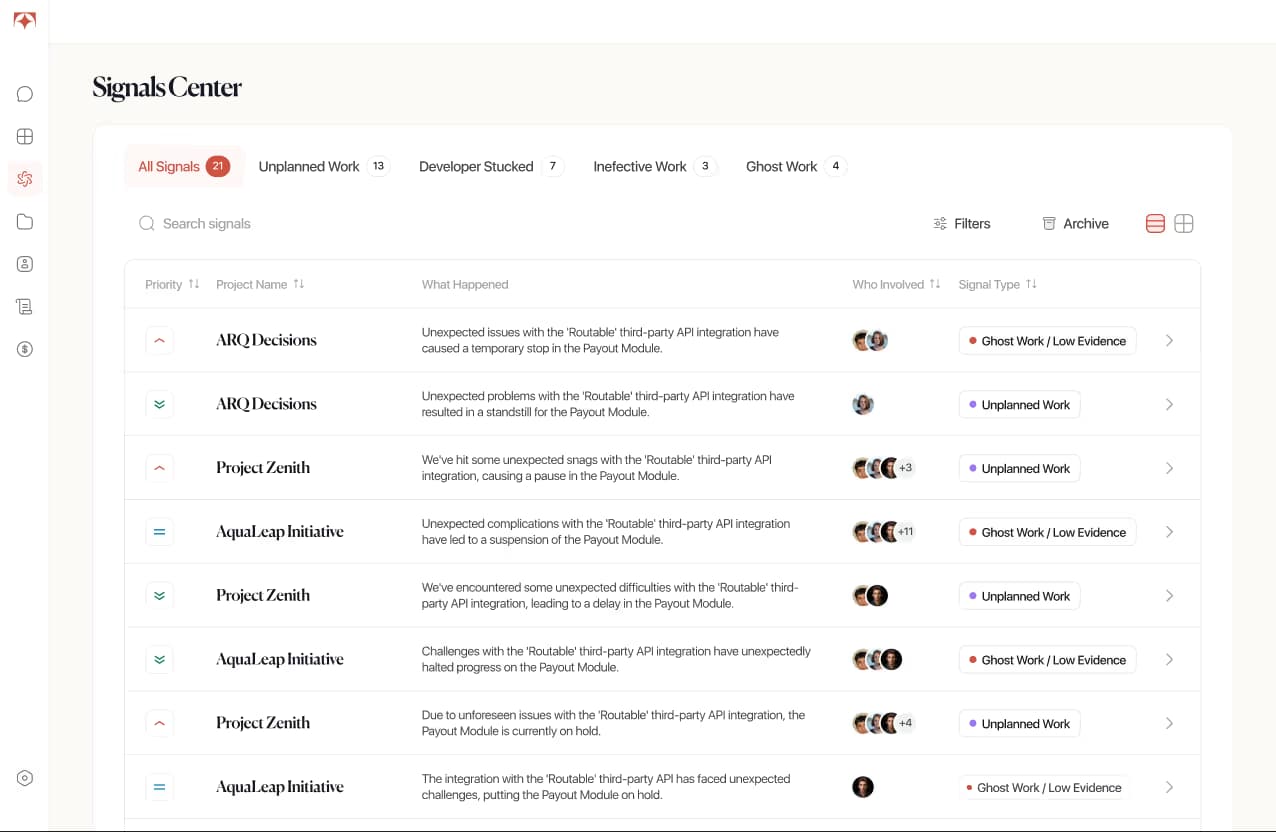
Teams and Features Section
The same delivery record serves the whole organization, each role reading it for different answers. Tolmete gives leadership, managers, finance, and engineers their own view without putting anyone through an extra process.
See which initiatives need attention, where delivery risk is growing, and where engineering capacity is actually going.
AI Delivery Intelligence, Intelligent Risk Alerting, Evidence-Based Signals
Understand what changed across initiatives, which risks matter, and what action can help the team move forward.
AI Delivery Intelligence, Evidence-Based Signals, AI Mitigation Plans, Intelligent Risk Alerting, Deep Integrations
Understand how engineering effort is distributed across products, initiatives, maintenance, support, onboarding, and tech debt.
AI Time Logging, AI Delivery Intelligence, Evidence-Based Signals
Log work faster with AI assistance and spend less time on timesheets or explaining work after the fact.
AI Time Logging, Deep Integrations
Why Tolmete is Different
Agencies rarely lack tools. They already run software agency time tracking software for hours, project management tools for tasks, and accounting systems for invoices. The missing layer is project margin intelligence software that connects all three, because that connection is where agency margins are protected or lost.
The Old Way
The Automated Way
Traditional reports tell clients what happened after someone spends time building them. Tolmete gives clients a transparent, up-to-date reporting view when they need it.
Privacy and Trust Section
In-house product teams work with proprietary code, sensitive product context, and internal delivery conversations. Tolmete helps teams understand delivery patterns without exposing the content that needs to stay private.
Tolmete works with delivery signals such as tickets, work logs, calendars, and activity metadata. It reads project movement without storing proprietary source code.
Tolmete uses collaboration patterns only from channels your team explicitly connects to. It does not analyze private threads or direct messages.
Tolmete does not record screens, track keystrokes, or monitor mouse activity. AI-prepared time logs are reviewed and confirmed by the person who did the work.
Your team continues to use Jira, GitHub, Slack, and the rest of its stack. Tolmete connects the delivery picture around those tools without replacing your workflow.
Tolmete connects time logging, early warning signals, team health insight, stakeholder reporting, and effort allocation, so the capacity your team spends becomes work your business can understand, explain, and improve.
FAQ
Everything you need to know about Tolmete.