Everything Looks on Track, until You Compare Progress With Logged Hours
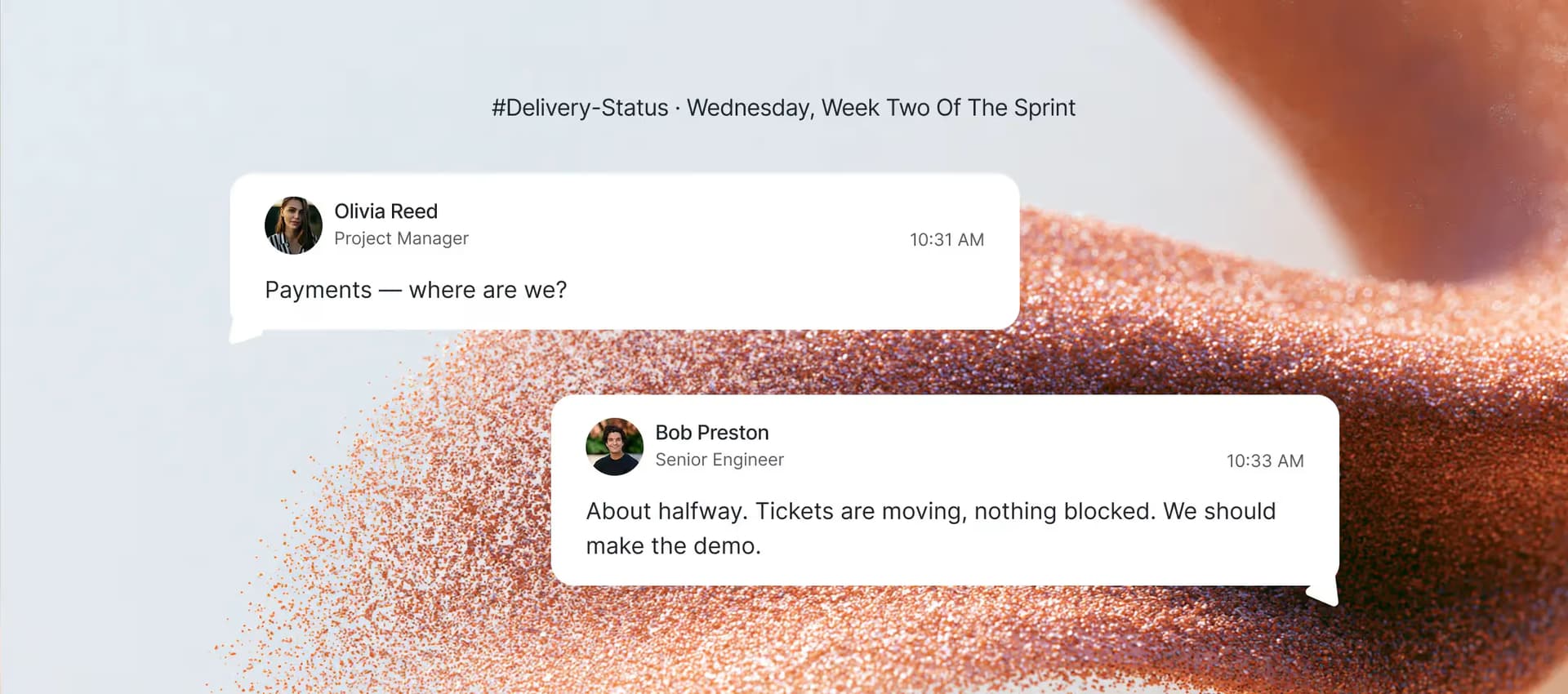
It is Wednesday, midway through the sprint, and Payments is the largest workstream on this fixed-price project. During the weekly delivery call, Olivia asks for a quick progress update.
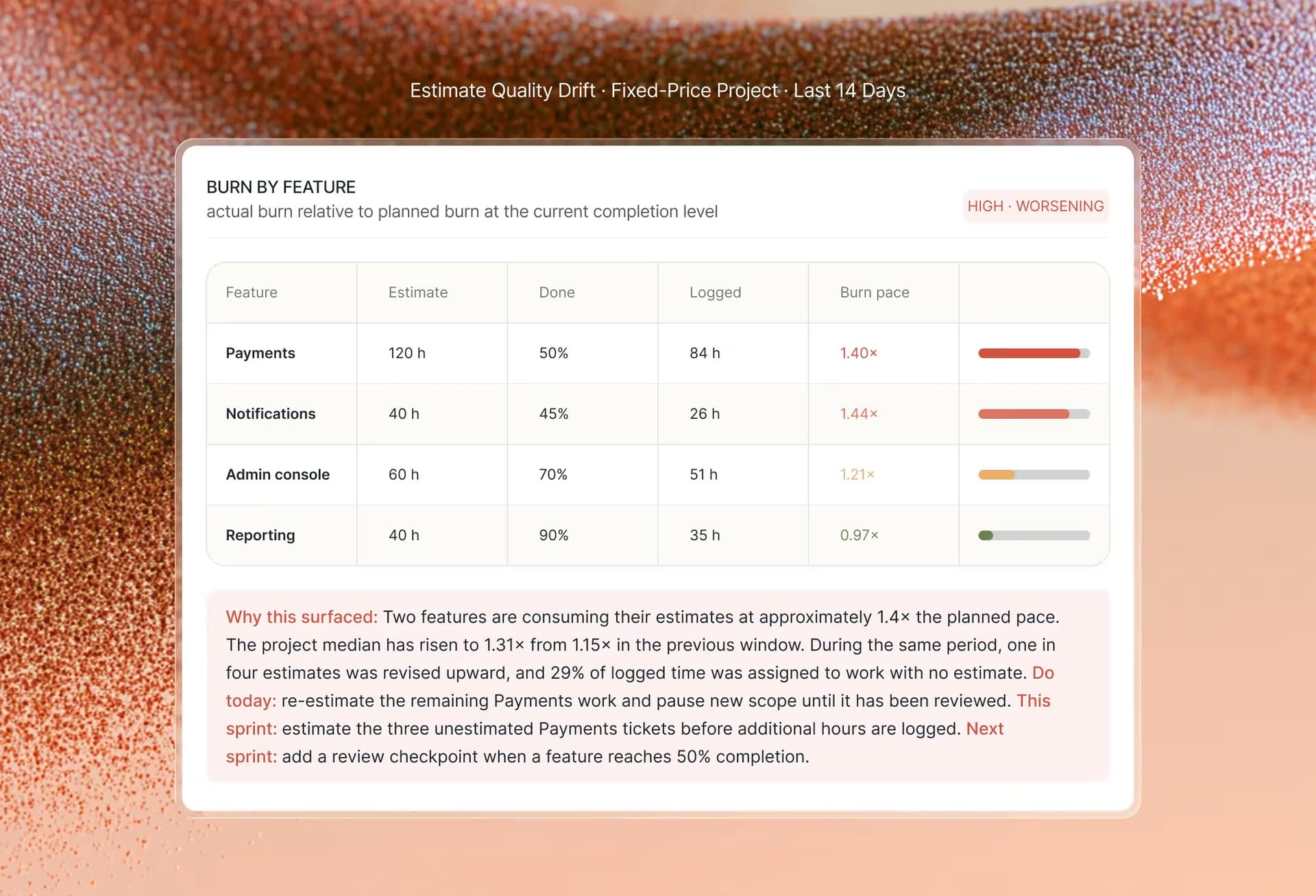
Bob's update is accurate because the feature is about 50% complete, yet the picture changes when progress is compared with time spent. Payments was estimated at 120 hours, so the planned burn at this point was 60 hours. The team has already logged 84 hours, putting the feature at 1.4× its planned pace. If that pace continues, Payments will finish at roughly 168 hours.
No one is concealing the overrun. Estimates are recorded in tickets, while actual hours are tracked in time logs. Because the two numbers remain separate during delivery, the project board can stay green after the economics have moved off plan.
One inaccurate estimate may be an isolated error. Estimate drift appears when several features repeatedly consume effort faster than they progress, while status calls continue to sound normal.
This pattern affects development shops, agencies, studios, and consultancies because they often price work at times of highest uncertainty. Under fixed-price contracts, the company carries the additional cost as a loss of margin. On T&M, the client receives an invoice that no longer matches the forecast.
The commercial impact differs, although the reporting failure remains the same. Project boards, timesheets, and the monthly P&L reveal the damage after the useful decisions have already narrowed.