
Small changes that turn into invoice risk
A slow review, a growing ticket, or a quiet blocker may look harmless on their own. Tolmete shows when small changes begin to pose a real delivery risk.
Evidence-Based Signals
By the time a delivery problem surfaces, the cost is already baked in. Tolmete turns scattered project activity into clear, evidence-based signals - warning lights for delivery risk. They show what changed, why it matters, and where managers should act before the issue reaches the client or the invoice.
The Problem
A project runs two weeks late with no prior escalation, or an invoice arrives for work that quietly went sideways - because delivery decisions were based on status updates that weren't grounded in anything.
A slow review, a growing ticket, or a quiet blocker may look harmless on their own. Tolmete shows when small changes begin to pose a real delivery risk.
Without evidence, status depends on who explains it best. Tolmete grounds delivery conversations in observable project activity.
When a client asks what happened, managers need more than "we're checking." Tolmete keeps the evidence ready, so explanations are faster and harder to dispute.
Tolmete gives managers a clearer record of what happened. It turns scattered activity into data-backed delivery signals, helping teams understand the situation faster, reduce blame, and avoid last-minute reconstruction.

A risk signal is only useful when the team can understand where it came from. Tolmete connects each delivery signal to the work behind it: commits, pull requests, tickets, reviews, logged time, and blockers. The result is data-backed project signals managers can trust.
Instead of a vague warning, Tolmete explains the reason.
Managers can see what changed, where the signal appeared, and what supports it.
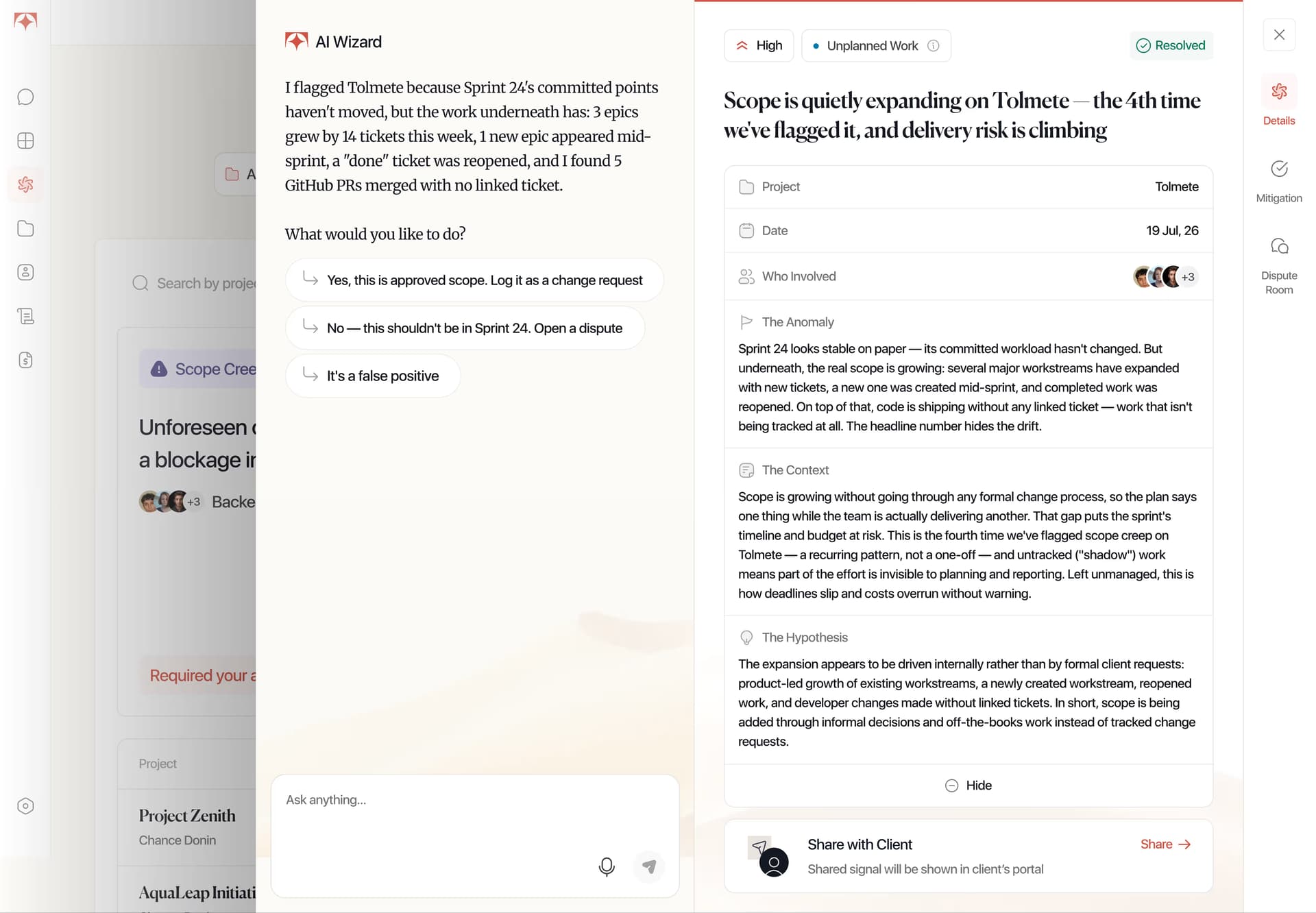
Tolmete turns scattered commits, tickets, reviews, logged time, and blockers into clear AI project signals — with the reason behind each one, so managers can act with confidence.
How it works
Tolmete brings together activity from the tools the team already uses, without adding new workflows.
The platform looks for stalled tasks, repeated code changes, delayed reviews, blockers, and unexpected scope.
Managers see where the signal originated, when it appeared, and which activity made it significant.
Tolmete explains the signal clearly, so managers can align the team and respond before the issue affects delivery.
What Tolmete Watches for
Tolmete does not detect vague “delivery friction.” It detects named patterns with clear definitions and supporting evidence. Project risk detection becomes grounded in real activity, not assumptions. The same signals apply across dev shops, marketing agencies, design studios, and consultancies.
Unplanned work enters the sprint unnoticed. Tolmete flags it before unapproved hours accumulate.
A task is taking longer than expected with no clear explanation — Tolmete shows how long it has been building.
The same code is rewritten repeatedly. Tolmete surfaces the pattern before it affects the timeline.
Hours are logged with no matching activity. Tolmete highlights the gap before it becomes a billing issue.
One person carries too much of the critical work. Tolmete flags it before their absence stalls the project.
Repeated misestimates make delivery plans unreliable. Tolmete tracks the pattern before it affects commitments.
Sustained pressure signals where output is about to drop. Tolmete makes it visible before quality suffers.
A new contributor shows little traceable output. Tolmete surfaces it before it affects the sprint.
Get in touch for the full list or to discuss signals specific to a particular workflow.
Signals over opinions
Evidence-Based Signals provide a factual foundation for every delivery conversation. Instead of relying on memory or interpretation, teams work from observable facts, so the focus stays on what needs to happen next.
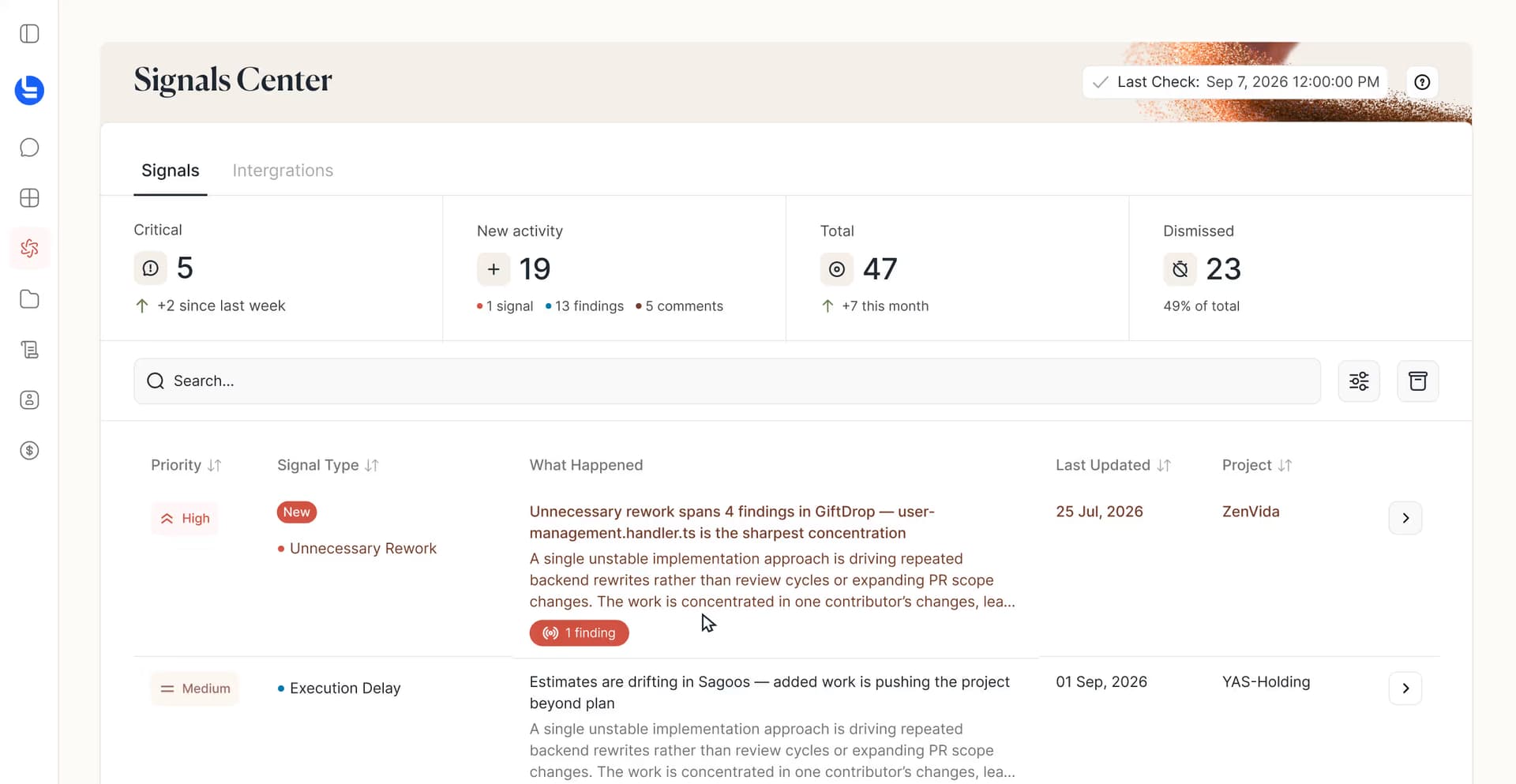
Every project risk signal in Tolmete connects to real project activity: commits, tickets, reviews, logged time, and blockers.
Tolmete shows the pattern behind the signal: what changed, when it started, and what project data supports the concern.
Not every signal requires action. Tolmete separates meaningful delivery risk detection from routine activity so managers focus on what actually needs attention.
Each validated project delivery signal comes with a specific recommendation: what to address, who should respond, and when, while there is still time to act.
The evidence that protects client relationships
Tolmete helps contributors log time faster, but that is only one part of its value. Beyond AI time logging, the system improves record quality and provides teams with a more reliable view of how work flows across projects.
Fewer surprise escalations
Faster risk discovery
Stronger client trust
A clear audit trail of every delivery decision
Tolmete gives agency leaders an evidence-based view across the portfolio so delivery decisions are based on what is actually happening, not what gets reported up.
No more piecing together the picture from status threads and gut feel. Tolmete provides PMs with evidence for each signal, so they can clarify issues earlier and escalate only when needed.
When timelines change, clients want to understand why. Tolmete gives managers a data-backed timeline that turns a difficult conversation into a trust-building moment.
FAQ
Everything you need to know about Tolmete.